When it comes to muscular, loyal and often misunderstood dog breeds, Pit Bulls and American Bullies frequently top the list. While these breeds share some similarities, they have distinct differences in their origins, physical characteristics, temperament and roles as companions. In this blog post, we’ll explore what sets Pit Bulls and American Bullies apart, with a special focus on the American Bully’s exceptional qualities as a devoted and affectionate companion, despite their strong and imposing presence.
Origins and History
Pit Bulls
The term “Pit Bull” is often used as an umbrella term for breeds like the American Pit Bull Terrier, American Staffordshire Terrier, and Staffordshire Bull Terrier. Originating in the 19th century, Pit Bulls were bred in England from bulldogs and terriers for bull-baiting and later dog fighting. Their history gave them a reputation for strength, tenacity, and courage. After blood sports were banned, Pit Bulls transitioned into roles as farm dogs, guard dogs, and loyal family pets. The American Pit Bull Terrier, recognized by the United Kennel Club (UKC), is the most prominent of the Pit Bull-type breeds.
American Bully
The American Bully is a relatively new breed, developed in the United States during the 1980s and 1990s. Breeders aimed to create a dog that retained the muscular build and loyalty of Pit Bulls but with a more compact, stocky frame and a gentler temperament. The American Bully is a cross between breeds like the American Pit Bull Terrier, American Staffordshire Terrier, and other bulldog-type breeds. Recognized by the American Bully Kennel Club (ABKC) and the UKC, the breed was designed to be a family-friendly companion with a focus on temperament and appearance rather than athleticism for fighting.
Physical Characteristics
Pit Bulls
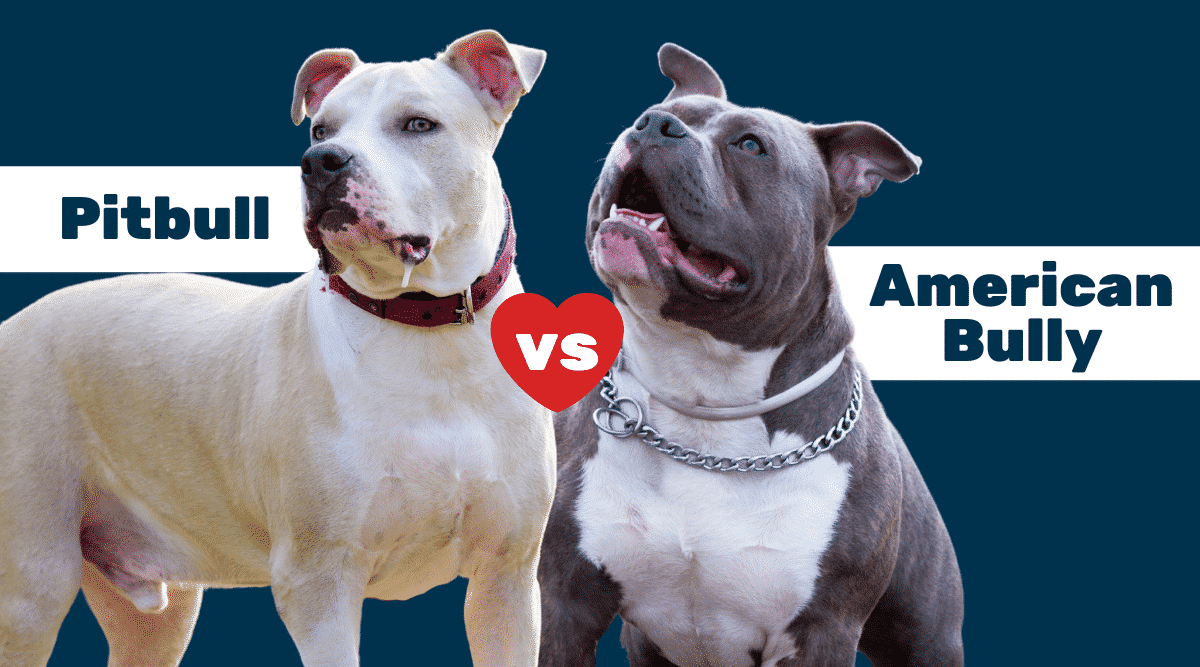
Pit Bulls are medium-sized dogs, typically weighing between 30–60 pounds and standing 17–21 inches tall. They have a lean, athletic build with a smooth coat, a broad head and a strong jaw. Their physique reflects their history as working dogs, with a focus on agility and endurance. Pit Bulls come in a variety of colours, including brindle, black, blue, and red.
American Bully
American Bullies are more compact and muscular than Pit Bulls, with a broader chest, thicker neck, and more pronounced bone structure. They typically weigh between 70–120 pounds, depending on the class (Pocket, Standard, XL, or Classic), and stand 13–21 inches tall. Their appearance is often described as “exaggerated,” with a blocky head, short snout, and a stocky, low-to-the-ground frame. Their coat is short and glossy, and they come in a wide range of colours and patterns.
Temperament and Personality
Pit Bulls
Pit Bulls are known for their high energy, intelligence and loyalty. They are confident, strong-willed dogs that thrive on human interaction and mental stimulation. While they can be protective, their natural disposition is friendly and affectionate toward people when properly socialised. However, due to their history, some Pit Bulls may exhibit dog-aggression if not trained or socialised early. With the right owner, Pit Bulls are loving, playful and eager to please, making them companions for active households.
American Bully
The American Bully was intentionally bred to emphasise a calm, gentle and family-oriented temperament. While they retain the loyalty and protectiveness of their Pit Bull ancestors, American Bullies are typically more laid-back and less prone to dog-aggression. They are known for their patience, especially with children and their desire to be close to their owners. American Bullies are confident yet relaxed, making them excellent companions for families, singles, or anyone seeking a devoted pet. Their “tough guy” appearance belies their soft, affectionate nature, often described as “velcro dogs” because they love sticking close to their humans.
Misconceptions and Advocacy
Both Pit Bulls and American Bullies face unfair stereotypes due to their muscular builds and historical associations with dog fighting. However, the American Bully’s intentionally bred temperament makes it a standout ambassador for changing perceptions about “bully breeds.” Responsible ownership, proper training and socialisation are key to showcasing their true nature as loving, loyal companions.
Conclusion
While Pit Bulls and American Bullies share a common ancestry, they are distinct breeds with unique characteristics. Pit Bulls are athletic, energetic and fiercely loyal, making them great for active owners who can provide ample exercise and training. American Bullies, on the other hand, combine strength and loyalty with a calm, affectionate demeanour that makes them exceptional companions for a wide range of households. Their gentle nature, love for people and adaptability make American Bullies particularly special as devoted family pets.
If you’re considering adding a four-legged friend to your life, the American Bully might just steal your heart with their big muscles, bigger love, and unwavering loyalty. With the right care and environment, these dogs prove that strength and companionship go hand in paw.