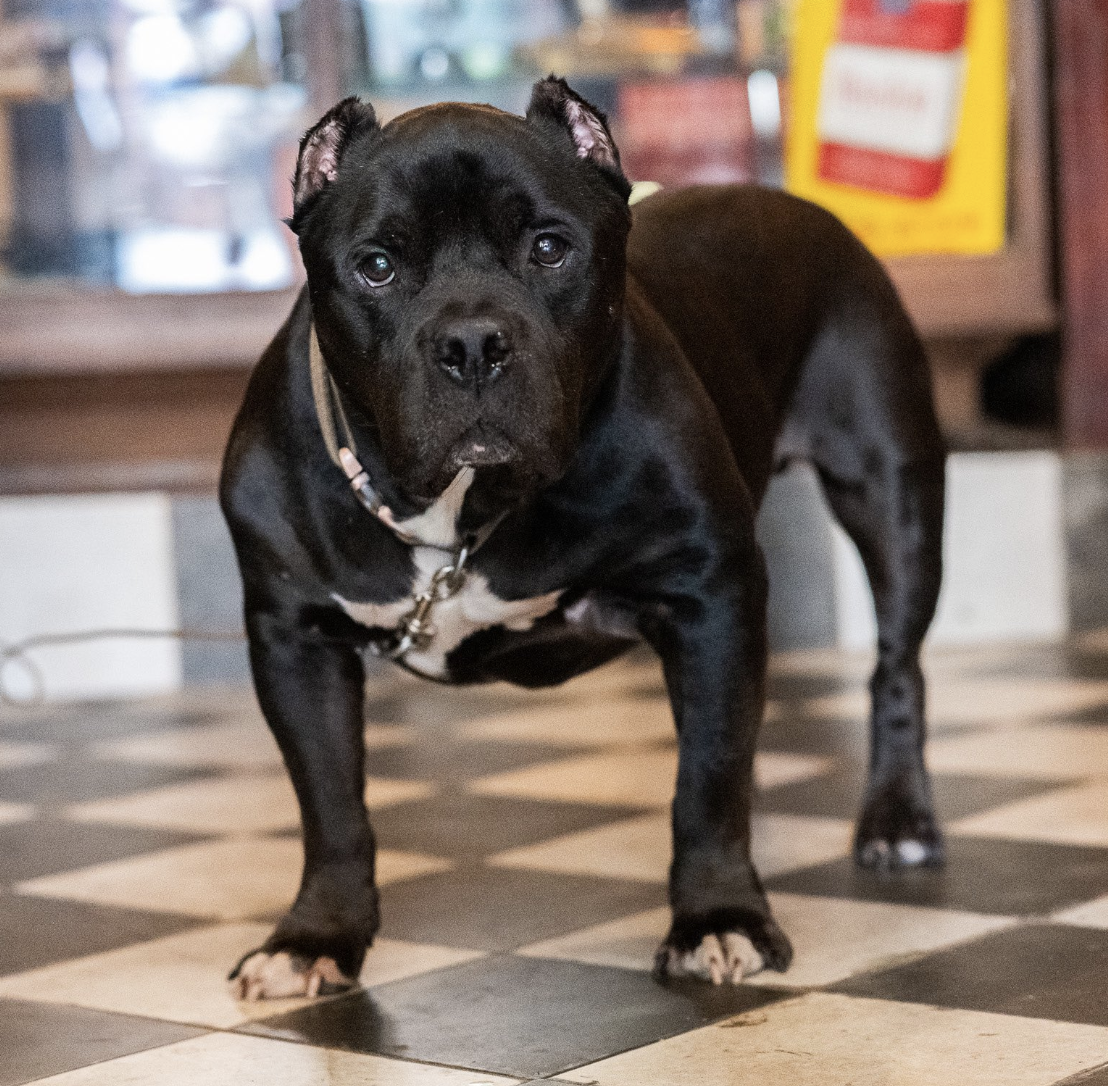
In a world where headlines often highlight the harsh realities faced by misunderstood breeds like the American Bully, stories of triumph remind us of the incredible resilience hidden within four paws. Enter Biggie, a 7-year-old American Bully whose journey from tragedy in Louisiana to a joyful life in New York City embodies the essence of survival, healing, and unbreakable spirit. Shot by a police officer, battling heartworm, and undergoing surgeries on both back ACLs, Biggie’s path wasn’t just about physical recovery—it was a profound lesson in forgiveness, loyalty and the transformative power of love.
The Heart-Wrenching Beginning
Biggie’s story began in the shadows of misfortune down in Louisiana. At just three years old, he was tragically shot by a cop during an incident that left him scarred but alive. Details of the exact circumstances remain sparse, but what stands out is how this gentle giant didn’t let the trauma define him. Instead of retreating into fear or aggression—a stereotype often unfairly pinned on bully breeds—Biggie emerged as a beacon of gentleness. Rescued and rehabilitated, he waited six months before finding his forever family, who saw beyond the bullet wounds to the loving soul underneath.
This initial chapter offers a unique insight into the misconceptions surrounding American Bullies. Often portrayed as inherently dangerous due to their muscular build and powerful jaws, Biggie’s case flips the narrative. Breed-specific legislation and media bias have long stigmatized these dogs, leading to higher euthanasia rates in shelters. Yet, Biggie’s story reveals that trauma doesn’t breed viciousness; it can foster an even deeper capacity for trust. His owners describe him as “the sweetest dog in the world,” someone they’d “leave alone in a room with a baby.” This challenges us to question our prejudices: Are we judging dogs by their breed, or by the environments and experiences that shape them?
The Road to Recovery: A Trooper’s Battle
Biggie’s recovery wasn’t a straight path—it was a marathon of medical hurdles that tested his endurance. After the shooting, he faced heartworm disease, a parasitic infection that can ravage a dog’s cardiovascular system if left untreated. This condition, common in warmer climates like Louisiana, required intensive treatment, including medications to kill the worms and strict rest to prevent complications. Adding to the complexity, Biggie needed surgeries on both his back ACLs (anterior cruciate ligaments), injuries that could stem from the physical trauma of the gunshot or simply the wear and tear on a large-breed dog.
What makes Biggie’s healing journey uniquely insightful is how it mirrors human recovery processes. Veterinary experts note that dogs like him often recover faster than expected due to their innate optimism and lack of psychological baggage—unlike humans, they don’t dwell on “why me?” Instead, they focus on the present, wagging their tails through pain. Biggie’s “trooper” status, as his family calls it, highlights the role of supportive care: a dedicated vet team, a loving home environment, and perhaps even alternative therapies like hydrotherapy for ACL rehab. In a broader sense, this underscores the importance of accessible veterinary care for rescue animals. Many dogs in similar situations don’t get a second chance because of high costs—Biggie’s story inspires advocacy for subsidized programs that could save countless lives.
Another layer of insight comes from the breed’s physical resilience. American Bullies, bred for strength and athleticism, have a remarkable ability to bounce back from injuries. Biggie’s case illustrates how proper nutrition, exercise, and early intervention can turn potential disabilities into mere footnotes in a dog’s life story. Today, he strolls the streets of New York City’s Division and Canal, a living testament to what modern veterinary medicine and human compassion can achieve.
What Biggie Inspires: Lessons in Love and Second Chances
Biggie isn’t just a survivor; he’s an inspiration that ripples far beyond his own fur. His tale encourages us to embrace forgiveness in a divided world. Despite being betrayed by those meant to protect, Biggie greets everyone with wags and warmth, teaching that holding onto grudges only hinders healing. In an era of rising animal abuse cases and shelter overcrowding, he motivates people to adopt rather than shop, especially for breeds like his that face discrimination.
On a personal level, Biggie has inspired his family and community to advocate for bully breeds. Stories like his have sparked movements on social media, where owners share positive experiences to combat stereotypes. He’s a reminder that every dog deserves a chance to rewrite their narrative—from victim to victor. For those battling their own recoveries, whether physical or emotional, Biggie symbolizes hope: If a dog can overcome bullets, parasites, and surgeries with grace, surely we can face our challenges with a little more tail-wagging optimism.
In the end, Biggie’s legacy is one of pure, unfiltered love. He proves that strength isn’t about size or scars—it’s about the heart that beats beneath them. So, the next time you see an American Bully, think of Biggie: a trooper who turned pain into purpose, inspiring us all to be a little kinder, a little braver, and a whole lot more loving. If you’re moved by his story, consider supporting local rescues or sharing your own pet’s journey—because every tale of resilience has the power to change the world, one paw at a time.