The American Bully, with its muscular frame, loyal disposition and unmistakable charm, has captured the hearts of dog enthusiasts worldwide. This relatively new breed, developed from a mix of American Pit Bull Terrier, American Staffordshire Terrier, and various Bulldog breeds, is celebrated for its companionship and versatility.
However, owning or breeding an American Bully comes with a profound responsibility to prioritise their health, well-being and quality of life. In this article, we’ll explore the essential health standards for American Bullies, best practices for responsible breeding and how to provide the love and care these dogs deserve.
Understanding American Bully Health Standards
The American Bully is a robust breed, but like all dogs, they are prone to specific health concerns that require proactive management. Responsible owners and breeders must prioritize health testing, proper nutrition, and regular veterinary care to ensure these dogs thrive.
1. Common Health Issues
- Hip and Elbow Dysplasia: Due to their muscular build, American Bullies can be susceptible to joint issues. Hip and elbow dysplasia, where the joints don’t form properly, can lead to pain and mobility issues. Regular screening through X-rays and evaluations by organizations like the Orthopedic Foundation for Animals (OFA) can identify these conditions early.
- Skin Conditions: Their short, smooth coats make them prone to allergies, dermatitis, and skin infections. Regular grooming and monitoring for redness, itching, or hot spots are crucial.
- Heart Conditions: Some American Bullies may develop heart issues like congenital heart defects. Routine veterinary checkups, including heart screenings, can catch problems early.
- Brachycephalic Concerns: In some lines with shorter snouts (influenced by Bulldog ancestry), breathing difficulties can occur, especially in extreme heat or during intense exercise. Owners should monitor for signs of respiratory distress.
2. Health Testing Standards
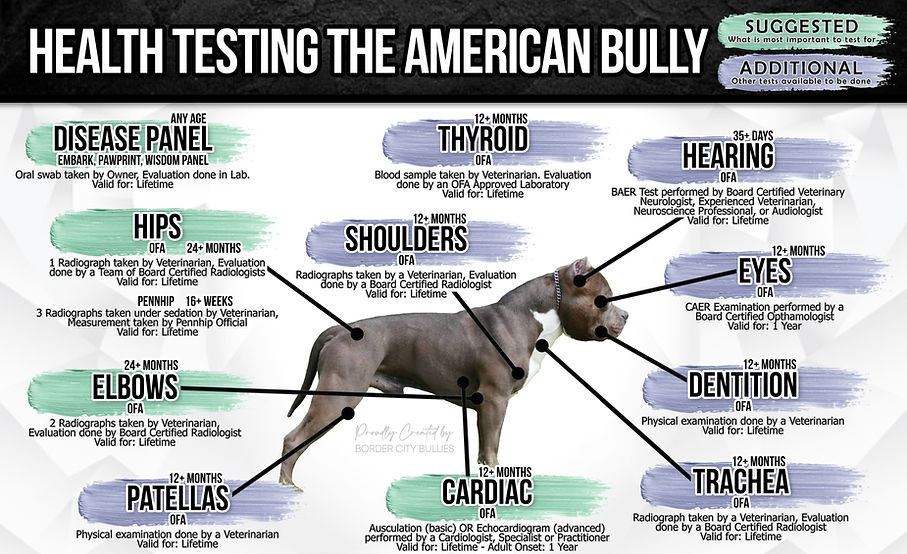
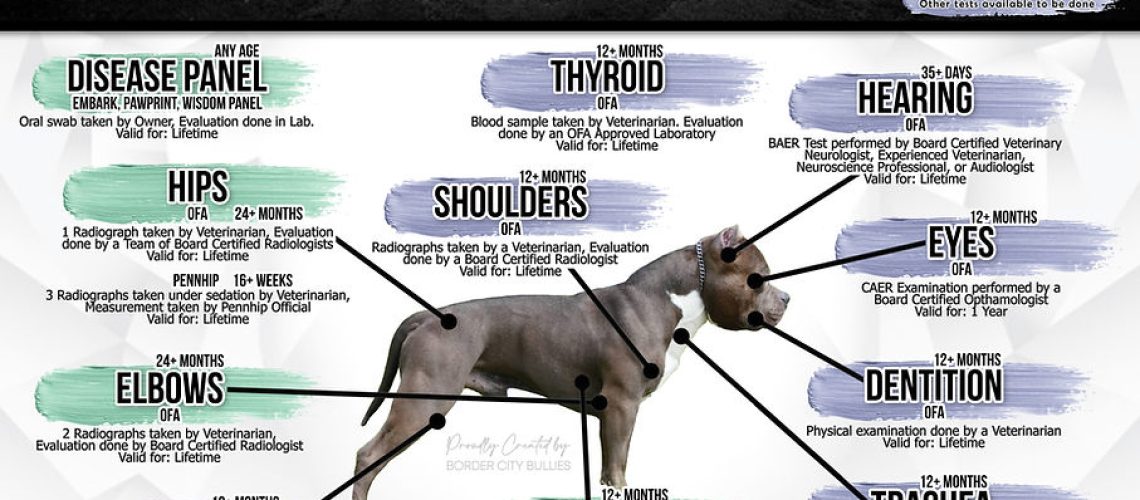
Responsible breeders adhere to health testing protocols to ensure their dogs are free from hereditary conditions. Key tests include:
- OFA or PennHIP evaluations for hip and elbow dysplasia.
- Cardiac screenings to rule out heart defects.
- Genetic testing for conditions like Progressive Retinal Atrophy (PRA) or other hereditary diseases.
- Skin and allergy assessments to ensure the dog’s coat and skin are healthy.
Reputable registries like the American Bully Kennel Club (ABKC) emphasize health testing as part of ethical breeding standards.
3. Lifespan and Wellness
With proper care, American Bullies typically live 10–15 years. A balanced diet tailored to their size and activity level, regular exercise, and mental stimulation are critical to maintaining their health. Obesity can exacerbate joint issues, so portion control and an active lifestyle are essential.
Responsible Breeding: Putting Health and Temperament First
Breeding American Bullies is not just about producing puppies with striking looks—it’s about preserving the breed’s integrity and ensuring each dog leads a healthy, happy life. Responsible breeding is rooted in love for the breed and a commitment to its future.
1. Selecting Healthy Breeding Pairs
- Breeders should only use dogs that have passed rigorous health screenings. This includes genetic testing to avoid passing on hereditary conditions.
- Temperament is equally important. American Bullies are known for their friendly, confident, and stable personalities. Breeding aggressive or overly timid dogs can harm the breed’s reputation and produce puppies unsuited for family life.
- Avoid breeding dogs with exaggerated physical traits, such as extremely short snouts or overly bulky frames, which can lead to health issues like breathing difficulties or joint strain.
2. Ethical Breeding Practices
- Avoid Overbreeding: Female American Bullies should not be bred too frequently. A general rule is no more than one litter per year, with adequate recovery time to maintain the dam’s health.
- Puppy Socialization: Puppies should be raised in a loving, stimulating environment, exposed to various sights, sounds, and people to foster confidence and sociability.
- Transparency: Responsible breeders provide health records, genetic test results, and detailed information about the puppy’s lineage to prospective owners. They also offer health guarantees and remain available for support throughout the dog’s life.
3. Combating Backyard Breeding
The rise in popularity of the American Bully has unfortunately led to an increase in backyard breeding, where profit trumps health and welfare. These breeders often neglect health testing, leading to puppies with preventable conditions. Supporting reputable breeders who prioritize health and temperament helps preserve the breed’s legacy and reduces the number of dogs in shelters.
The Heart of Responsible Ownership
Loving an American Bully means committing to their health, happiness and legacy. Whether you’re a breeder or an owner, your choices shape the future of this remarkable breed. By prioritizing health testing, ethical breeding practices and attentive care, you contribute to a world where every American Bully is cherished, healthy and free to be the loyal companion they were bred to be.
If you’re considering adding an American Bully to your family, seek out reputable breeders who share your values. Visit shelters or rescue groups, as many Bullies need loving homes. And above all, shower your Bully with the love they deserve—they’ll return it tenfold with their unwavering devotion and joyful spirit.
Let’s celebrate the American Bully not just for their strength and beauty, but for the profound bond they offer to those who care for them responsibly. Together, we can ensure this breed thrives for generations to come.