
Most people meet a champion as a caption.
A photo. A ribbon.
A line on a pedigree that looks finished. Easy to scroll past. Easy to copy. Easy enough, if you are not careful, to forget that the word only means something if the test behind it was real.
That is the part worth slowing down for.
The beginning was not a brand.
The American Bully did not arrive in South Africa as a finished industry. It arrived as a bet.
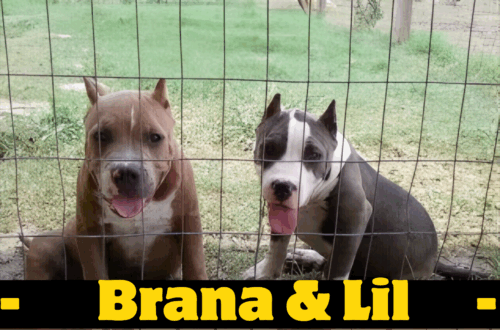
In 2011 Ronel and Steven Rogers brought in two ABKC-certified dogs, Brana and Lil. They were not importing a trend. They were asking whether this companion breed — the bone, the presence, the temperament — could take root here with dignity. Two years later the American Bully Federation of Southern Africa was formed, the first registry of its kind in the country. In 2020 that work was gathered under Bully Assure.
We say “first” carefully. Being first is not a trophy. It is a responsibility you inherit whether you asked for the weight of it or not. Someone has to keep the paper honest. Someone has to keep the ring honest. Someone has to refuse the version of growth that looks impressive and leaves the breed thinner than it found it.
That is the heritage we are trying to honour. Not the date on a founding document. The decision, repeated over years, to treat the breed as more than a look.
Why the ring still matters – A sanctioned show is an inconvenient thing, and that is its value. It asks a breeder to bring the dog they talk about into a space they do not control. Same standard. Same classes. Same rules for the kennel with ten years behind it and the handler stepping in for the first time. No private arrangement. No borrowed points. No title that appears because another gathering decided the word should move faster.
Bully Assure champions are made only from points earned at Bully Assure sanctioned shows. Other events may be enjoyable. They may even be useful. They are not the same thing. A title that can be assembled from wherever it is convenient stops being a title. It becomes a costume.
People sometimes hear that as protectionism. It is closer to respect. If the word champion is going to sit on a South African dog, it should be able to travel into a conversation with a serious buyer, a serious breeder, or a serious registry without someone having to explain the asterisk.
The ring does something else as well. It teaches the eye. Handlers learn what the standard actually asks for. Spectators see the difference between a dog that photographs well and a dog that holds together when it moves. Young breeders leave with a clearer picture of what they should be aiming at, and what they should stop defending.That education does not show up on a flyer. It shows up five years later in the quality of the litters.
Breeders, and the claim they make – Every pairing is a public statement. This sire. This dam. This future.
Without a proper record, that statement lives on personality. Personality can be genuine. It can also be a good story with nothing underneath it.
A sanctioned championship does not make a dog perfect. It does something more modest and more useful. It says: this animal was presented, measured, and not found wanting against the dogs that actually arrived to compete. That is a fact a breeder can stand next to. It is also a fact a buyer can verify.
For the people doing the work the right way — health, temperament, structure, patience — that matters commercially as much as it matters ethically. Proof protects price. Proof protects reputation when the market gets noisy. Proof gives a kennel a reason to keep improving instead of merely keeping busy.It also changes the conversation between breeders. Less “trust me.” More “come and see.”
The market is watching, even when it pretends not to – South Africa’s American Bully scene is no longer a small circle of early believers. Money has arrived. So have shortcuts. So have listings that hope you will fall in love before you ask a difficult question.
A healthy market needs friction. Papers. DNA. Health results. And a show system that cannot be talked into a result.
When titles are scarce and earned, buyers have a landmark. When titles are plentiful and vague, buyers have theatre. Theatre is exciting until someone takes a puppy home and discovers that the story did not survive the first year.
Sanctioned shows are one of the few public places where the breed can correct itself in daylight. A weak trend gets seen. A honest dog gets seen. The public, who may only ever attend one event, leaves with a better idea of what an American Bully is supposed to be — not a threat, not a cartoon, a companion with substance.
That is not only good for kennels. It is good for the breed’s standing in a country that has reasons to look hard at powerful dogs.
Eleven, so far – There are eleven champions under Bully Assure.Read that without rushing to make it larger than it is. Eleven is not a parade. It is a record of dogs and people who stayed in the system long enough for the points to mean something.
Their names belong in one place, where anyone can look without needing an introduction. If you breed, look at what it took. If you are thinking of buying, look at what can be proven. If you are new to the breed, look at the standard made flesh instead of the standard made into an argument.
What we are trying to be first at now – The early years were about arrival. These years are about whether arrival turns into a culture.
We are not interested in being first as a caption. We are interested in being first at the unglamorous parts: keeping shows open and fair, keeping titles tied to the events that awarded them, keeping the paper trail clean enough that a dog’s story can outlive a weekend.
There will be more names. There should be. The point is not to freeze the list. The point is to make sure that when the next name is added, nobody has to squint to understand how it got there.
Heritage is only real while people are still willing to do the boring, visible work that created it.
That work happens in the ring. It happens on the pedigree. It happens every time a breeder chooses the longer route because the shorter one would empty the word they wanted to use.I
f you want to understand what Bully Assure is proud of, start there. Not with a claim. With eleven dogs, and the system that made their titles possible.